
Veteran-Owned | Licensed & Insured
CSLB #1108764 | DIR #1001134591
Room-specific flooring. Proper slab preparation. Commercial systems selected around how your facility actually operates.
Simplicity Flooring & Tile installs healthcare and medical flooring for clinics, medical offices, dental practices, treatment spaces, and commercial healthcare facilities throughout Northern California.
Medical flooring is not one product. The right system depends on the room, slab condition, cleaning products, rolling equipment, and how much downtime the facility can tolerate. Some spaces may benefit from resinous flooring. Others may be better served by commercial sheet flooring, rubber, LVT, tile, or another system.
We evaluate those conditions before recommending the floor. The goal is not to sell the same material to every room. It is to choose a system that makes sense for the way the space is actually used.
When a healthcare floor fails, the finished material is often only the symptom. Bubbling sheet flooring, open seams, peeling coatings, cracking, or recurring surface damage can be caused by moisture, poor preparation, incompatible adhesives or coatings, moving joints, chemical exposure, or simply choosing the wrong system for the room. Installing a new floor without understanding why the old one failed can recreate the same problem with a new material. That is why we start with the conditions underneath and around the floor before we start talking about finish options.
Concrete can look dry and still contain enough moisture to damage certain adhesives or coatings. Moisture testing and acceptable limits depend on the system and manufacturer requirements. If the slab is outside those limits, that needs to be addressed before installation.
Old adhesive, coatings, contamination, weak concrete, cracks, and uneven areas can interfere with a new floor. Where appropriate, we mechanically prepare the substrate rather than relying on shortcuts that leave the real problem in place.
“Chemical resistant” is too broad for a healthcare project. We want to know what your facility actually uses so the flooring can be compared against the manufacturer’s published compatibility information.
Wheelchairs, carts, chair casters, treatment equipment, and repeated turning loads can matter just as much as foot traffic.
A system that performs well but requires more shutdown time than the facility can absorb may not be the right system for the project.
There is no single “best healthcare floor.” The better question is: which system fits this room, this facility, and this maintenance program?

Resinous flooring can include systems using epoxy, urethane, polyaspartic, and other chemistries.
It can be a strong fit for high-wear service areas, spaces needing a continuous floor surface, chemical exposure, cove details, or demanding commercial use.
A system marketed simply as “epoxy” may actually include multiple layers and chemistries. The finish coat can have a major effect on wear, stain resistance, UV stability, and chemical performance.
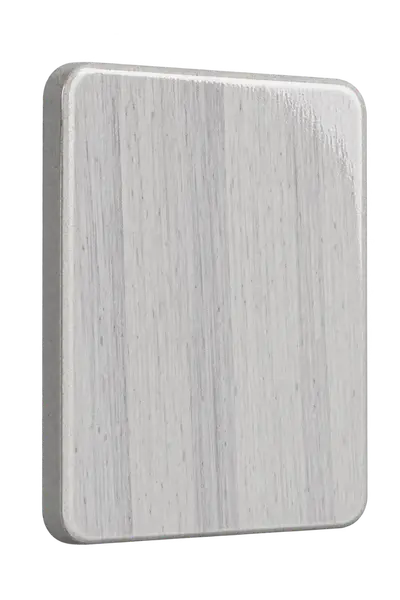
Commercial sheet flooring is widely used in healthcare because it can provide welded seams, resilient performance, lower-profile transitions, and easier movement for carts and equipment.
For many clinical spaces, it may be the better choice.
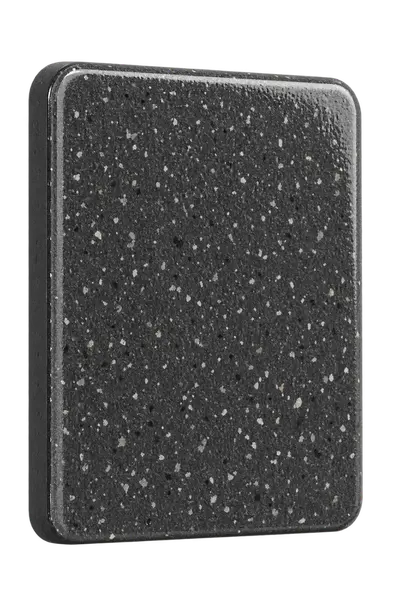
Rubber can make sense where comfort underfoot, acoustics, mobility, and constant traffic are important, including corridors, therapy areas, and patient-facing spaces.
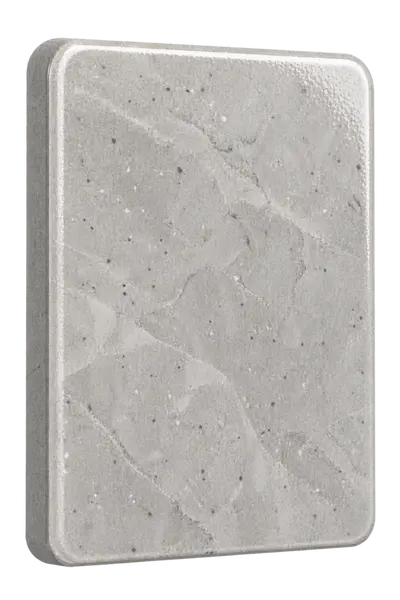
LVT can work well in waiting rooms, reception areas, offices, and other lower-risk spaces where design and easier replacement matter.
Tile can work well in selected wet or service areas, but the grout, movement joints, substrate, and transitions are part of the system and should be considered along with the tile itself.
Epoxy is not automatically the right answer because a building is medical.
There are projects where sheet flooring, rubber, LVT, tile, or another system may be more appropriate because of acoustics, comfort, rolling resistance, repairability, room function, or project specifications.
We would rather recommend the floor that fits the project than force the project to fit the material.
Most homeowners come in knowing they want epoxy — the decision that actually takes some thought is which system fits how they use the space and what they want it to look like.
For practices replacing aging flooring, remodeling treatment areas, or comparing resilient and resinous options.
For operatories, sterilization areas, reception spaces, corridors, and staff areas where one system may not fit every room.
For facilities coordinating flooring work around patient schedules, equipment, cleaning procedures, and room-specific requirements.
For environments where moisture, fluid exposure, equipment movement, frequent cleaning, and downtime all matter.
For commercial projects needing a clear scope, substrate evaluation, system comparisons, scheduling coordination, and one point of accountability.
For spaces dealing with water, grease, heat, cleaning chemistry, and slip conditions that need to be evaluated differently from exam rooms or offices.

Simplicity Flooring & Tile completed a 5,800-square-foot medical flooring project involving failed sheet vinyl, mechanical concrete preparation, moisture mitigation, a flake epoxy system, and a polyaspartic topcoat.
Project snapshot:
• 5,800 sq. ft.
• Sheet vinyl removal
• Mechanical grinding
• Moisture mitigation
• Flake epoxy + polyaspartic topcoat
• 3-person crew
• 15-day project timeline
The project is a good example of why medical flooring decisions need to begin below the finished surface. The visible problem was failed flooring. The installation plan also had to address the condition underneath it.

Healthcare flooring projects can sometimes be completed in phases so portions of a building remain in use.The plan may include room-by-room scheduling, after-hours work, weekend installation, temporary pathways, controlled work areas, or staged reopening. The important part is defining what “back in service” means before installation begins. A floor may be ready for foot traffic before it is ready for rolling carts, heavy equipment, wet cleaning, disinfectants, or full operational use.
Return-to-service requirements vary by flooring system, chemistry, adhesive, temperature, humidity, and site conditions. We review those requirements as part of the project plan rather than relying on a generic “one-day floor” promise.

A hospital, licensed clinic, dialysis facility, private medical office, and dental practice are not all regulated the same way.
Requirements can change based on facility licensing, room use, approved construction documents, accessibility requirements, and the authority having jurisdiction.
Simplicity Flooring & Tile does not replace the project architect, design team, facility manager, or code authority. We work from the approved requirements for the project and help evaluate flooring systems against the actual site conditions we find.

We've served Shasta, Tehama, Glenn, and Butte Counties for years. This is our community, not just our service area.
We don't subcontract. The people who show up to your garage are Simplicity employees who have installed hundreds of floors. If something needs attention after the job, you're calling us — not tracking down a third party.
A 100% solids epoxy base with a UV-stable polyurea topcoat. Not the single-coat, water-based products at big-box stores. Professional-grade materials designed for 10–20+ year performance under real-world use.
Market Center, CHP projects, and Northern California developers trust us with their floors. That standard doesn't change for residential jobs.

Qualifying commercial coating systems include written warranty coverage based on the selected system, surface condition, preparation, use, and maintenance requirements. Review the warranty terms before installation so your team understands what is covered and how to protect the completed floor.
There is no single best flooring for every medical office. Exam rooms, corridors, treatment areas, waiting rooms, utility spaces, and restrooms may have different needs. The right system depends on room use, cleaning, equipment, substrate, moisture, maintenance, and project specifications.
It can be. Resinous systems can be a strong fit where a continuous surface, chemical resistance, durability, cove detailing, or heavy commercial performance is needed. Epoxy is not automatically the best choice for every medical room.
No. Certain healthcare spaces may require specific monolithic, cove, or seam details, while other rooms may appropriately use welded sheet flooring, LVT, rubber, tile, or other commercial systems.
Sometimes. Projects may be completed room by room or in phases. Feasibility depends on demolition, dust, noise, odor, cure time, circulation routes, equipment, and the facility’s approved construction controls.
We recommend comparing the facility’s actual cleaning products and procedures with the manufacturer’s published compatibility information for the proposed flooring system.
Many commercial flooring systems require moisture evaluation before installation. The appropriate test and acceptable limit depend on the flooring, adhesive, coating, or mitigation system being specified.
Neither is universally better. Resinous flooring can provide a continuous high-performance surface, while commercial sheet flooring can provide welded seams, resilience, acoustic benefits, and easier rolling traffic. A facility may use both in different rooms.
Some do. Requirements vary according to facility licensing, room type, jurisdiction, accessibility requirements, and the approved project specifications.
We look at more than the sample you like.
We evaluate the rooms, existing flooring, concrete, moisture, cleaning products, equipment, traffic, operational schedule, and shutdown window before recommending a system.
No pressure. No national call center. You will talk to the team responsible for the work.

Learn how commercial kitchen flooring supports sanitation, slip resistance, chemical resistance, and faster return to service.

Compare epoxy with commercial polished concrete flooring for retail, warehouse, school, medical, and public-facing environments.

Low-maintenance flooring for warehouses, retail stores, schools, medical offices, and other public-facing commercial spaces.

See completed projects, preparation methods, installation timelines, and real-world results from commercial flooring jobs across Northern California.

Take a deep dive and compare commercial epoxy vs. concrete flooring options →
We use cookies to improve your experience on our site. By using our site, you consent to cookies.
Manage your cookie preferences below:
Essential cookies enable basic functions and are necessary for the proper function of the website.
These cookies are needed for adding comments on this website.
Statistics cookies collect information anonymously. This information helps us understand how visitors use our website.
Google Analytics is a powerful tool that tracks and analyzes website traffic for informed marketing decisions.
Service URL: business.safety.google (opens in a new window)
Jetpack's built-in visitor analytics. It records page views, referring sites, search terms, and outbound link clicks, and also carries the shared visitor-tracking library used by Jetpack Instant Search and WooCommerce Analytics.
Service URL: automattic.com (opens in a new window)
Google reCAPTCHA helps protect websites from spam and abuse by verifying user interactions through challenges.
You can find more information in our Cookie Policy and .