Slab-tested prep. High-PSI systems. In-house crews who understand what a floor has to survive.
Most warehouse floor failures aren’t a product problem. They’re a prep problem.
A coating applied over a slab that hasn’t been properly profiled, moisture-tested, or crack-repaired will fail — regardless of what’s in the bucket. Hot tire pickup, delamination, peeling at the seams, bubbling under pallet jack wheels. These aren’t material defects. They’re what happens when installation is rushed to hit a price point or a schedule.
At Simplicity Flooring & Tile, we’ve seen what the failures look like. We’ve been called in to fix them. The standard we hold ourselves to on prep is the same whether the job is a two-car garage or a 40,000-square-foot distribution center.

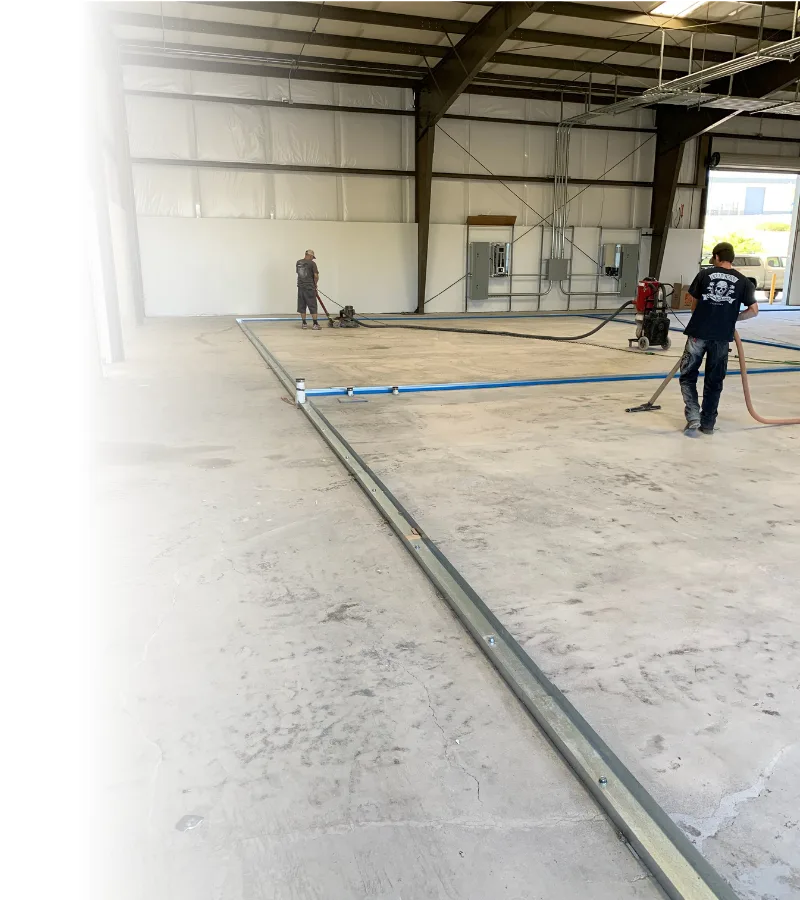
We mechanically profile the concrete so the system bonds at the surface level, not on top of it. No acid wash. No shortcuts.

Northern California slabs especially older poured concrete in Shasta, Tehama, and Butte Counties- can hold moisture levels that will destroy a coating from underneath. We test before anything goes down. If the numbers are elevated, we address it before we install.

We fill and feather cracks, address control joint movement, and flag structural concerns before the topcoat conversation ever starts.
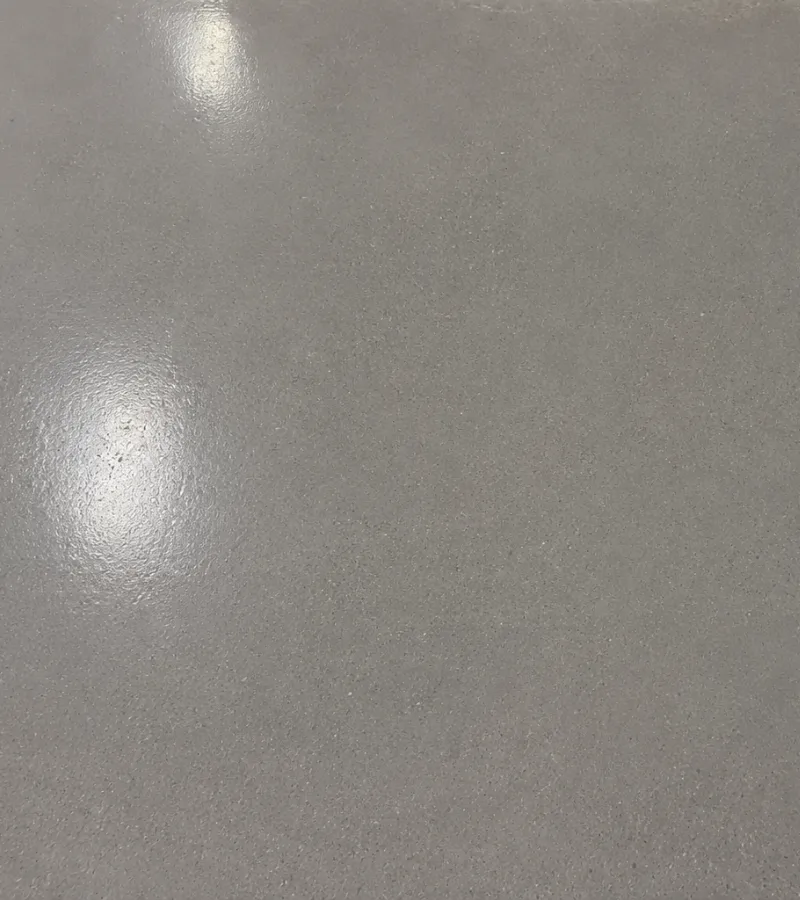
This is what separates a floor that holds up under forklifts in year eight from one that starts delaminating in year two.
Not every warehouse needs the same solution. The right system depends on your load weights, chemical exposure, traffic patterns, and what you’re storing. Here’s how the main options actually compare for NorCal warehouse environments:
Standard commercial systems include a UV-stable topcoat. Optional broadcast flake adds slip resistance and conceals surface imperfections in older concrete.
Distribution centers, manufacturing floors, storage facilities with forklift traffic
The workhorse of industrial flooring. 100% solids formulations not the water-based products available at big-box stores. This creates a dense, non-porous surface that resists oils, solvents, hydraulic fluid, and impact. Applied in multiple coats over a properly prepared slab, a commercial epoxy system will typically outlast a budget coating by a decade or more under the same conditions.
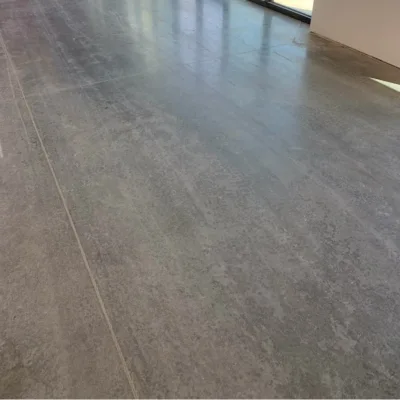
If your operation doesn’t involve heavy chemical exposure, polished concrete is often the highest-value long-term choice for a warehouse floor.
Distribution hubs, dry goods warehouses, facilities where forklifts run on smooth concrete daily
There's no coating to peel, chip, or delaminate. The floor surface itself is densified and hardened. Operating costs drop because maintenance is a mop and no recoat cycle. The tradeoff: polished concrete is less forgiving if your slab has significant contamination or moisture issues. That's where our pre-install assessment matters.
Fast-curing, chemical-resistant flooring built to handle constant forklift traffic, heavy loads, and demanding warehouse environments.
Facilities that need fast return-to-service and can’t afford multi-day downtime
Polyaspartic systems cure fast, typically same-day or next-day return to service depending on conditions. They're increasingly common for NorCal warehouses where shutting down operations for 3–5 days isn't viable. We use polyaspartic topcoats over properly prepared epoxy base systems on jobs where schedule is a hard constraint.
Cure time: Fast — often same-day light traffic, next-day full load
UV stability: Excellent — won’t amber or yellow under skylights
Note: Still requires proper slab prep underneath. A fast topcoat on a bad substrate is still a bad floor.
Commercial warehouse flooring is priced by square footage, slab condition, system type, and access requirements (operating hours, phased installs, equipment clearance). A warehouse floor is not a single-day residential job, and the pricing reflects that.
Factors that move the number:
We don’t quote jobs we haven’t walked. Our site assessments are free, pressure-free, and include a written scope so you know exactly what you’re getting before you commit to anything
Your warehouse flooring system is a long-term operational investment. That’s why qualifying commercial coating systems include a 10-Year Limited Warranty covering installation-related coating failure under normal operating conditions.
Most homeowners come in knowing they want epoxy — the decision that actually takes some thought is which system fits how they use the space and what they want it to look like.
Forklift traffic, pallet drops, and daily foot traffic in the same space. You need a floor that handles all three without cracking under the weight of heavy load cycles or deteriorating at the turn radii where forklifts pivot. Our systems are specified for the actual PSI and traffic patterns in your facility, not generic “commercial grade.”
Oil, coolant, solvent exposure, and heavy equipment. The floor is part of your safety system, not just a surface. Slip resistance, chemical resistance, and anti-dusting performance aren’t optional features, they’re specs.
Temperature cycling and moisture migration are the enemy of coatings in cold storage environments. We assess slab moisture behavior before spec’ing a system, and we install systems rated for the temperature ranges your facility actually operates in.
Northern California warehouses serving agriculture such as seed storage, equipment bays, processing facilities, deal with a specific combination of dust, moisture, and chemical exposure. We’ve worked in Shasta, Tehama, and Glenn County agricultural facilities and understand what those slabs and conditions require.
If you’re a property owner or developer prepping a flex industrial space for lease, the floor condition directly affects what tenants you attract and at what rate. A properly installed, well-prepped warehouse floor is a capitalized asset, not a maintenance cost.
When you hire Simplicity, the people who show up to your facility are Simplicity employees — not a hired crew sourced the week of your job. That matters on commercial work because accountability doesn’t end when the install does. If something isn’t right, you call us. There’s no third party to track down.
We’ve completed commercial flooring projects for the California Highway Patrol, Daiso, Tractor Supply, regional medical facilities, and distribution centers across the North State. The standard we bring to a 500-square-foot veterinary clinic is the same one we bring to a 50,000-square-foot warehouse.
We don’t compete on price. We compete on not having to come back.
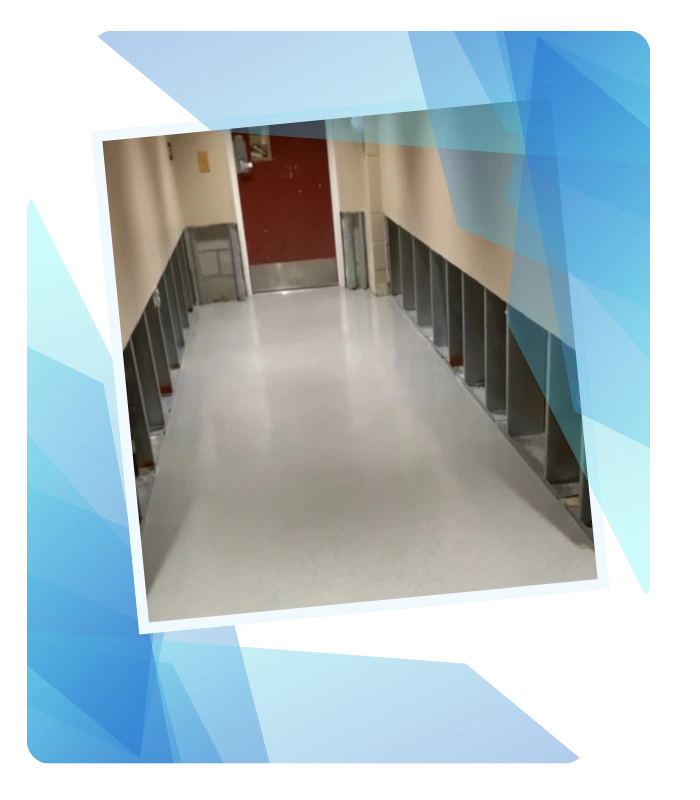
Cottonwood, CA — High-PSI epoxy over an active state facility. Coordinated around operating hours. Zero downtime required.
We've served Shasta, Tehama, Glenn, and Butte Counties for years. This is our community, not just our service area.
We don't subcontract. The people who show up to your garage are Simplicity employees who have installed hundreds of floors. If something needs attention after the job, you're calling us — not tracking down a third party.
A 100% solids epoxy base with a UV-stable polyurea topcoat. Not the single-coat, water-based products at big-box stores. Professional-grade materials designed for 10–20+ year performance under real-world use.
Market Center, CHP projects, and Northern California developers trust us with their floors. That standard doesn't change for residential jobs.
Many warehouse floor failures don’t happen because of the coating itself. They happen because the concrete was not properly prepped before installation. Surface preparation is one of the biggest factors that determines long-term performance.
A standard warehouse floor — prep, base system, topcoat — typically runs 3 to 5 days depending on square footage, slab condition, and cure requirements. If your facility can’t go offline for that window, we can discuss phased installation by zone to keep operations running. Polyaspartic topcoat systems can reduce return-to-service time significantly for facilities with hard schedule constraints.
We’ve done both. For operating facilities, we coordinate install schedules around your shifts, phase work by section, and communicate clearly on re-entry timelines. A site walkthrough lets us assess access, ventilation requirements, and equipment staging so there are no surprises on install day.
Product formulation and solids content. The coatings available at home improvement stores are water-based, low-solids products designed for light residential use. They’re not engineered for forklift loads, fuel exposure, or the thermal cycling a Northern California warehouse floor experiences between summer heat and cold nights. A 100% solids commercial system is a different product category entirely — denser, harder, more chemically resistant, and significantly longer-lasting under real-world abuse.
Depends on why it’s failing. If the existing coating is delaminating due to a substrate or moisture issue, grinding it off and fixing the underlying problem is the only path to a floor that will actually last. We’d rather tell you that up front than install over a problem and have you calling us back in 18 months. If the existing system is mechanically sound and the failure is surface-level, coating over it is sometimes viable after proper prep.
Yes. We serve commercial clients throughout Northern California — Redding, Anderson, Chico, Red Bluff, Cottonwood, Corning, Orland, Shasta Lake, and surrounding Shasta, Tehama, Glenn, and Butte Counties. For large commercial projects, we also work outside this area; contact us with your location and scope.
Our standard labor warranty is one year. For specific systems and project types, extended coverage options are available — ask during your site assessment. Product manufacturer warranties apply separately based on the system specified.
We assess the slab, understand your operational requirements, and give you a clear written scope before you commit to anything.
No pressure. No national call center. You’ll talk to the people who will actually do the work.